Our Research
Thinking about how we think.
01 — Understanding cognitive control networks
We are interested in understanding how brain activity in connected regions (‘networks’) supports cognitive function - understanding how we think. Specifically, we study the cognitive domains of selective attention (focusing on objects, either internally or externally in the environment) and ‘proactive control,’ or how we hold information in mind to achieve our goals. How these processes occur are important unanswered questions in neuroscience, as many aging adults and patients with cognitive disorders suffer from network pathology. This results in clinical symptoms such as cognitive deficits, dementia, attention, or mood disorders. If we can understand how brain activity supports these functions, we can begin the process of restoring lost function through therapies such as neuromodulation (delivering stimulation to affected brain regions).
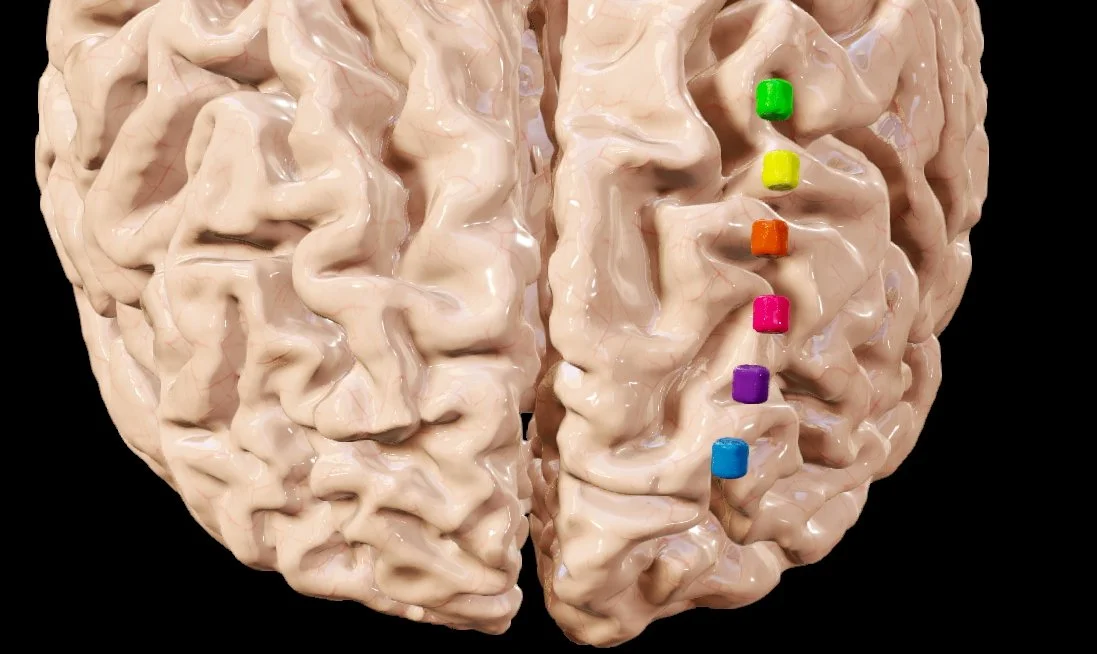
To do this, we study brain activity during cognitive tasks in participants undergoing deep brain stimulation surgery for movement disorders or epilepsy surgery. Many researchers use this method and the results allow us to discover new strategies for cognitive and neuropsychiatric diseases.
02 — Cortical stimulation for cognitive impairment
In addition to recording brain activity, we also use patterns of stimulation at specific regions in the brain to determine how this affects cognitive ability and brain activity. These results help us understand how neuromodulation (interacting with the brain through electrical or other means) may help improve cognitive function or mood, addressing some of the most prevalent human conditions, including dementia, depression, and attention disorders.
03 — Distributed network dynamics
We not only record and stimulate the brain, but also try to understand network dynamics, using approaches from non-physiologic complex systems (think avalanche dynamics or spiral galaxies) to model how similar dynamics might unlock key insights in brain dynamics. It is, after all, the most complex of systems!